
Wetsuit size chart and calculator
Enter your height and weight to see the wetsuit size in the O'Neill and Rip Curl charts for men, women and kids. The full charts are below.
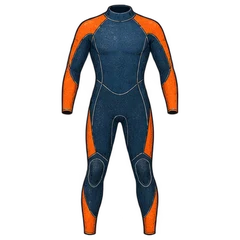
Shop this size
Enter height and weight above to get shopping links for your wetsuit size.
Affiliate links. We may earn a commission at no cost to you. See the disclosure.Men's wetsuit size chart
Height, weight, chest and waist as published by each store. The two O'Neill charts disagree on several sizes, so both are shown.
O'Neill (Scheels)
| Size | Height | Weight | Chest | Waist |
|---|---|---|---|---|
| XS | 5'7"–5'9" | 125–140 lb | 36.5–37.5" | 28.5–29.5" |
| S | 5'8"–5'10" | 135–155 lb | 37.5–39" | 29.5–31" |
| ST | 6'0"–6'2" | 145–165 lb | 37.5–39" | 29.5–31" |
| MS | 5'6.5"–5'8.5" | 145–165 lb | 39–41" | 31–33" |
| M | 5'9"–5'11" | 155–170 lb | 39–41" | 31–33" |
| MT | 6'1"–6'3" | 160–180 lb | 39–41" | 31–33" |
| LS | 5'7.5"–5'9.5" | 160–180 lb | 41–43.5" | 33–35" |
| L | 5'10"–6'0" | 170–190 lb | 41–43.5" | 33–35" |
| LT | 6'2"–6'4" | 180–200 lb | 41–43.5" | 33–35" |
| XLS | 5'8.5"–5'10.5" | 180–200 lb | 43.5–46" | 35–37" |
| XL | 5'11"–6'1" | 190–210 lb | 43.5–46" | 35–37" |
| XLT | 6'3"–6'5" | 200–220 lb | 43.5–46" | 35–37" |
| 2XLS | 5'9"–5'11.5" | 200–220 lb | 46–48.5" | 37–39" |
| 2XL | 6'0"–6'2" | 210–230 lb | 46–48.5" | 37–39" |
| 3XL | 6'0"–6'3" | 230–250 lb | 48.5–51" | 39–44" |
| 4XL | 6'1"–6'4" | 250–270 lb | 51–53.5" | 44–48" |
O'Neill (Ridershack)
| Size | Height | Weight | Chest | Waist |
|---|---|---|---|---|
| XS | 5'7"–5'9" | 125–140 lb | 36.5–37.5" | 28.5–29.5" |
| S | 5'8"–5'10" | 135–155 lb | 37.5–39" | 29.5–31" |
| ST | 6'0"–6'2" | 145–165 lb | 37.5–39" | 29.5–31" |
| M | 5'9"–5'11" | 155–175 lb | 39–40.5" | 31–32.5" |
| MT | 6'1"–6'3" | 160–180 lb | 39–40.5" | 31–32.5" |
| LS | 5'10"–6'0" | 170–190 lb | 40.5–42" | 32.5–34" |
| L | 5'11"–6'1" | 175–200 lb | 40.5–42" | 32.5–34" |
| LT | 6'2"–6'4" | 185–210 lb | 40.5–42" | 32.5–34" |
| XL | 6'0"–6'2" | 195–220 lb | 42–44" | 34–36" |
| 2XL | 6'1"–6'3" | 215–240 lb | 44–46" | 36–38" |
Rip Curl (Ridershack)
| Size | Height | Weight | Chest | Waist |
|---|---|---|---|---|
| XS | 5'5"–5'7" | 115–130 lb | 33–35" | 27–29" |
| S | 5'7"–5'9" | 130–150 lb | 35–37" | 29–31" |
| ST | 5'10"–6'0" | 130–155 lb | 35–37" | 29–31" |
| MS | 5'7"–5'9" | 145–160 lb | 37–39" | 31–33" |
| M | 5'9"–5'11" | 155–175 lb | 37–39" | 31–33" |
| MT | 6'0"–6'2" | 155–175 lb | 37–39" | 31–33" |
| LS | 5'9"–5'11" | 170–190 lb | 39–41" | 33–35" |
| L | 5'11"–6'1" | 175–195 lb | 39–41" | 33–35" |
| LT | 6'2"–6'4" | 175–200 lb | 39–41" | 33–35" |
| XL | 6'0"–6'2" | 195–215 lb | 42–44" | 35–38" |
| XXL | 6'1"–6'3" | 215–235 lb | 44–46" | 38–41" |
Women's wetsuit size chart
Rip Curl
| Size | Height | Weight | Chest | Waist | Hips |
|---|---|---|---|---|---|
| 2 | 5'2"–5'4" | 100–115 lb | 30–31" | 22–23" | 32–33" |
| 4 | 5'3"–5'5" | 110–125 lb | 31–32" | 23–24" | 33–34" |
| 6 | 5'4"–5'6" | 120–135 lb | 32–34" | 24–26" | 34–36" |
| 8 | 5'5"–5'7" | 130–145 lb | 34–35" | 26–27" | 36–37" |
| 10 | 5'6"–5'8" | 140–155 lb | 35–36" | 27–28" | 37–38" |
| 12 | 5'7"–5'9" | 150–165 lb | 36–38" | 28–30" | 38–40" |
| 14 | 5'8"–5'10" | 160–175 lb | 38–40" | 30–32" | 40–42" |
| 16 | 5'9"–5'11" | 170–185 lb | 40–42" | 32–34" | 42–44" |
O'Neill
| Size | Height | Weight | Chest | Waist | Hips |
|---|---|---|---|---|---|
| 2 | 5'1"–5'3" | 95–110 lb | 30.5–32" | 22.5–24" | 32.5–34" |
| 4 | 5'2"–5'4" | 105–120 lb | 32–33.5" | 24–25.5" | 34–35.5" |
| 6 | 5'3"–5'5" | 115–130 lb | 33.5–35" | 25.5–27" | 35.5–37" |
| 8 | 5'4"–5'6" | 125–140 lb | 35–36.5" | 27–28.5" | 37–38.5" |
| 10 | 5'5"–5'7" | 135–150 lb | 36.5–38" | 28.5–30" | 38.5–40" |
| 12 | 5'6"–5'8" | 145–162 lb | 38–40" | 30–32" | 40–42" |
| 14 | 5'7"–5'9" | 158–175 lb | 40–42" | 32–34" | 42–44" |
Kids' wetsuit size chart
One chart covers both Rip Curl and O'Neill. It lists no chest, waist or hip measurements.
| Size | Height | Weight | Age (guide only) |
|---|---|---|---|
| 8 | 48–50" | 50–60 lb | 7–8 |
| 10 | 52–54" | 63–75 lb | 9–10 |
| 12 | 56–58" | 78–92 lb | 11–12 |
| 14 | 60–62" | 95–110 lb | 13–14 |
| 16 | 63–65" | 112–128 lb | 15–16 |
Choosing between sizes
- Use height and weight first, then check chest and waist.
- If your height and weight point to different sizes, look at the short and tall versions (S and T) of the nearest size.
- Charts here come from retailer pages and may be from earlier seasons. Check the maker's current chart for the exact suit.
Worked example
A man is 5 feet 10 inches, 165 pounds, with a 40 inch chest and a 32 inch waist. Start with height and weight. In the Ridershack O'Neill chart, Medium is 5'9" to 5'11" and 155 to 175 lb, so he fits. Chest (39 to 40.5") and waist (31 to 32.5") fit as well. The Scheels O'Neill chart also gives him a Medium on height and weight (155 to 170 lb). Both O'Neill charts agree.
The Rip Curl chart is where it gets difficult. Medium (5'9" to 5'11", 155 to 175 lb) fits his height and weight, but its chest range is 37 to 39 inches and he measures 40. The next size, LS, covers 39 to 41 inches of chest and 5'9" to 5'11" in height, but its weight range starts at 170 lb. That is a Rip Curl suit where height and weight say Medium and chest says LS.
Rip Curl's own fit guide says to rank chest and height above waist and weight, and to take the snugger size when in doubt. By that rule he tries the LS first and keeps the Medium as the backup. If the LS bunches at the lower back, the Medium with a slightly tight chest is the other option. In an O'Neill suit he does not need to choose.
How a wetsuit is supposed to fit
O'Neill describes the right fit as a second skin, tightly wrapped around the body. The warmth comes from the thin layer of water between neoprene and skin. Excess material in the armpits, the lower back and behind the knees is the problem, because loose neoprene lets cold water flush through the suit.
Too tight causes the opposite trouble. O'Neill notes that restriction matters more in thick winter suits, which are less flexible to begin with. C-Skins adds that pressure at the neck, underarms or knees causes rubbing and strains the neoprene, which may shorten the suit's life. So you are looking for snug everywhere, with no single spot that pinches and no spot that gaps.
Take five measurements
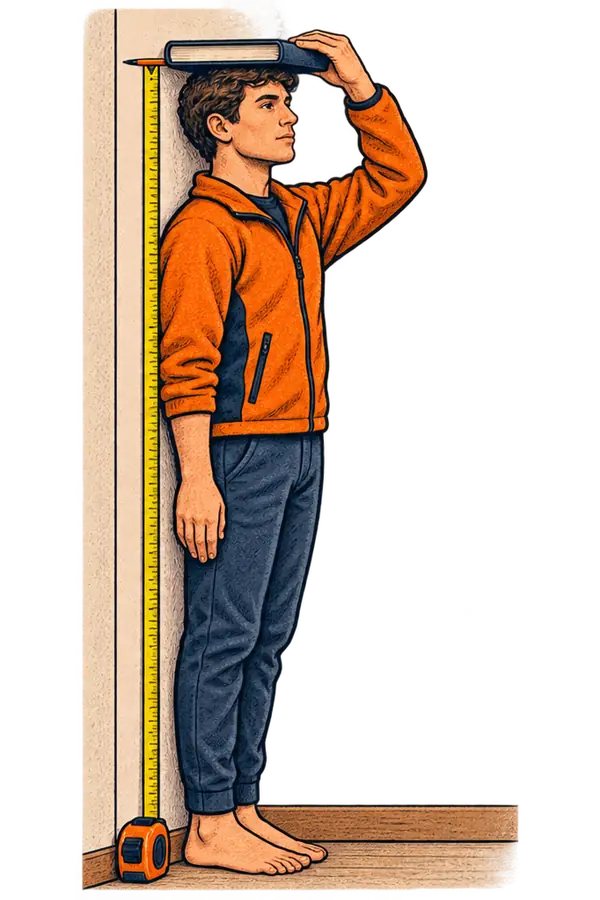
Use a soft tape, wear underwear or a swimsuit, and ask someone to hold the tape level. The brands agree on most of this:
- Height. Stand straight, barefoot, heels together against a wall (Rip Curl, Srface), and measure from the floor to the top of your head.
- Weight. O'Neill suggests weighing yourself at the time of day you usually surf, since people tend to be lighter in the morning. Srface says to weigh yourself in the morning with no heavy clothing.
- Chest, or bust for women. Measure the widest part with your arms relaxed. Rip Curl says not to flex or hold your breath. Srface says to keep the tape just under the armpits and use the average of your inhale and exhale.
- Waist. Measure at the natural waistline, around belly-button level. O'Neill has you breathe out first. Rip Curl wants the tape snug, not tight.
- Hips. Women's charts add hips, measured at the widest point (Rip Curl, Srface).
Sumarpo, whose guide is written for swimmers, adds one more observation: note whether you are longer in the torso or in the legs, and whether your build is stocky, lean or broad through the shoulders. It calls build a big factor when comparing brands.
Which measurement wins
When the numbers disagree, the brands give different priorities, and it helps to know who says what.
- Rip Curl: prioritize chest and height over waist and weight, every time. When in doubt, take the more snug size. A loose neck seal flushes cold water, while a snug waist relaxes after a few sessions.
- Srface: height and chest or bust are the two that matter most. If height points to one size and chest or waist to another, choose by chest. Waist and hips are more forgiving because the suit stretches more there. If you fall between sizes, consider the smaller one, provided your chest is in range.
- O'Neill: if your measurements fall at the top of a size's range, choose the next size up.
- Sumarpo: if you are between sizes and want buoyancy and a tight core, size down as long as you keep full shoulder mobility. If you want comfort and mobility, size up as long as the core stays snug without big wrinkles. If shoulders or back limit you, size for them and accept looseness at the waist, since a waist that is too tight makes breathing harder.
The O'Neill and Rip Curl advice pull in opposite directions at the top of a range, which is exactly where people tend to be. The reconciliation is that O'Neill is describing the weight and height end of the chart, and Rip Curl and Srface are telling you which column to trust if the columns disagree. Let chest decide, and use weight only to break ties.
Short and tall cuts
Letters after the size mark the cut. O'Neill says its sizes depend on body type, not just height: SS fits shorter people with a larger waist and chest, ST fits taller people with the same waist and chest, and S fits people in between. Srface gives the example of MS for a medium build who is shorter than average and LT for taller surfers who do not want to go up in width. Rip Curl says that if you run long through the torso or legs, check the tall variants (ST, MT, LT for men) before sizing up. The practical use is that a tall person who is Medium everywhere except length should try MT before moving to Large, which would be too wide.
Another worked example: one man, two charts
Take a man who is 178 cm (5 ft 10 in), 77 kg (170 lb), with a 102 cm chest and an 85 cm waist. Against O'Neill's chart: his height fits both Medium (175-180) and Large (178-183). His weight is 77 kg, the top of Medium (70-77) and the bottom of Large (77-86). His chest is 102, inside Medium (99-104) and below Large's start at 104. His waist is 85, one centimetre above the top of Medium (79-84) and inside Large (84-89).
That is two columns pointing to Medium, one to Large, and one on the line. O'Neill's top-of-range rule, applied to weight, would say Large. Rip Curl and Srface both rank chest above weight and waist, and chest says Medium. Srface says the waist is the forgiving measurement. So the answer is Medium, with a check on the shoulders and neck when it is on. If the shoulders bind or the neck feels like it chokes at a one-finger gap, go to Large and look at the tall cut instead.
The same man on Srface's chart is outside Medium on chest (95-99 cm). That brand's chart would send him up a size. Same body, different suit, which is why you check the chart for the model you are buying.
Fit checks on land
Put the suit on slowly. Rip Curl suggests working it up section by section instead of yanking at the zip, and says that if getting in takes a serious struggle, size up. Once it is on, check these:
- Neck. Rip Curl puts the limit at two fingers under the collar. Sumarpo says one to two, and one is usually enough. Too loose floods the suit, too tight chokes you.
- Wrists and ankles. Sleeves end at or just above the wrist bone and legs end just above the ankle (Rip Curl, Sumarpo).
- Lower back and knees. No bunching at the lower back or behind the knees. Srface adds to look for gaps under the arms and near the legs.
- Shoulder seams. They should sit on the shoulder. Rip Curl lists seams sitting off the shoulder as a red flag, along with air pockets or bunching across the torso.
- Movement. Take a full breath and raise both arms overhead. If both arms move freely, the fit is right (Rip Curl). Squat and rotate your torso too. O'Neill says you should be able to bend down and touch your toes.
A little dry tightness is normal. Rip Curl says neoprene relaxes in the water. Chest tightness that does not ease after a few minutes is a red flag, as is water flushing in at the neck when you lean forward.
Checks in the water
Land tests cannot show flushing. Sumarpo says neoprene stretches slightly in water and compresses at depth, so a suit that feels right dry often feels right wet, and a suit that already feels loose on land will likely feel worse in the water. Srface suggests the same principle from the other side: a wetsuit should feel snug from the moment you put it on, and may feel slightly tight at first.
Look for a cold trickle down your spine when you duck under, or a balloon of water that collects at the small of your back as you paddle. Those are the signs of a gap. Neoprene molds to your body over time. Rip Curl suggests giving a new suit two or three sessions before judging the fit, and Srface says it can take a few sessions to settle. Back-zip suits run slightly roomier, according to Rip Curl, while chest-zip and zip-free suits give a closer seal and a trimmer fit, so entry style can move you between sizes even in one brand.
How this chart is built
The men's tables come from O'Neill's chart as published by Scheels, O'Neill's chart as published by Ridershack, and Rip Curl's chart on the Ridershack guide. The women's and kids' tables come from the same Ridershack page. We checked O'Neill's own sizing article and Rip Curl's fit guide for how to measure and how to choose between sizes, but their size tables are shown as images or by model, so we do not reproduce those numbers here. The two O'Neill charts disagree on several sizes, such as the Medium chest, and neither source says which season it is from, so we show both and do not average them.
Questions
What size wetsuit do I need?
Match your height and weight to the chart. For example, a man 5 feet 10 inches and 165 pounds is a Medium in the Rip Curl chart (5'9" to 5'11", 155 to 175 lb) and an M in both O'Neill charts. Chest and waist columns help if you are between sizes.
What do S, T and the letters after a wetsuit size mean?
On men's suits an S or T after the size marks a shorter or taller cut of that size, such as MS (medium short) and MT (medium tall). The tables list the height range for each one.
Do wetsuit sizes differ between brands?
Yes. In the charts above a 5 foot 9 inch, 160 pound man is a Rip Curl MS or M and an O'Neill M (and an LS in the Scheels O'Neill chart). The O'Neill charts from Scheels and Ridershack also differ from each other, which suggests the sizing was revised between seasons. Check the maker's current chart.
What wetsuit size for a child?
Ridershack's kids' chart, which covers Rip Curl and O'Neill, goes by height and weight: size 8 is 48 to 50 inches and 50 to 60 lb, size 10 is 52 to 54 inches, size 12 is 56 to 58 inches, size 14 is 60 to 62 inches and size 16 is 63 to 65 inches. The age column is only a guide.
Should a wetsuit be tight?
It should be snug all round with no excess material at the neck, underarms or behind the knees. Srface says it should feel snug from the first moment; Rip Curl says some dry tightness is normal since neoprene relaxes in the water. Chest tightness that stays after a few minutes means the suit is too small.
What if I am between two wetsuit sizes?
Rip Curl says to choose by chest and height, and to take the more snug size when in doubt. O'Neill says to size up if you are at the top of the range. Check the short and tall cuts of the nearest size before giving up on it.
How many fingers should fit at the neck?
Rip Curl says two fingers is the limit. Sumarpo says one to two, with one usually enough. If you can get more than that under the collar, water will flush through.
Do women's wetsuits run large?
One brand says so. C-Skins states that its women's sizing runs large by between half and a whole size depending on style, growing at larger sizes. That is one brand's statement, so read the chart for the suit you want rather than assuming.
Related charts
 Hockey skate size chartSkate size from shoe size
 Bike helmet size chartHelmet size from head circumference
 All size chartsSnow, bikes, baseball and more
- O'Neill men's wetsuits size chart, as published by Scheels
- Ridershack, Wetsuit Size Guide (Rip Curl and O'Neill)
- O'Neill, How do I find the right size wetsuit?
- Rip Curl, Wetsuit Size Chart and Fit Guide
- Srface, Getting the right wetsuit size
- C-Skins, Sizing and Fit Guide
- Sumarpo, Wetsuit Sizing Tips: How to Measure Wetsuit Size