
Baseball glove size chart and calculator
Enter the player's age and position to get the glove size. The calculator lines up the glove charts of Rawlings, Wilson and Nike and of JustBallGloves, BaseballMonkey, Academy, Diamond Sport Gear and Target, and lists popular 2026 and 2027 gloves in that size.
Short answer: Most charts agree on a 9 to 10 inch glove for players 5 and under and 10 to 10.5 inches at 6 and 7. At 8 to 10, infielders use about 10.75 to 11.25 inches and outfielders 11.5; at 11 and 12, 11 to 11.5 in the infield and 11.75 to 12 in the outfield; from 13, about 11.25 to 11.75 in the infield, 11.75 to 12 for pitchers and 12.5 in the outfield. Catcher's mitts are measured around: about 31 inches at 8 to 10 and 33 to 34 from 15.
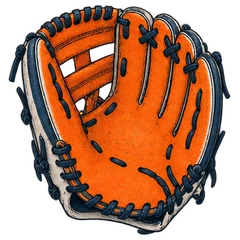
Every chart's size for this player
Each maker's and retailer's chart for the age and position you entered, side by side. Where they disagree, the result above is the size most of them include.
Enter the player's age above to see each chart's size.
Popular 2026 and 2027 gloves in this size
The size in each popular glove line that fits the range above, from the sizes retailers list for that position, with a link to check prices.
Enter the player's age above to see the size to look for in each popular glove.
Check the glove you have
Enter the size stamped on the player's glove (on the thumb or pinky) to see whether it fits the age and position above. For a catcher's mitt, enter the size around the mitt.
Shop this size
Enter the player's age above to get shopping links for that glove size.
Affiliate links. We may earn a commission at no cost to you. See the disclosure.Baseball glove size chart by age and position Printable card (PDF)
The sizes most of the eight charts include for each age and position, in inches. Catcher's mitts are measured around the mitt; every other glove from the tip of the index finger to the heel. Where the charts split evenly, both sizes are shown. Each chart uses its own age groups, so the calculator above, which takes an exact age, shows every chart's own figure.
| Age | Pitcher | Catcher (around) | First base | 2B / SS | Third base | Outfield | Utility |
|---|---|---|---|---|---|---|---|
| 5 and under | 9–10 | 29.5–30 | 9–10 | 9–10 | 9–10 | 9–10 | 9–10 |
| 6 | 10 | 29.5–30 | 10 | 10 | 10 | 10 or 10.5 | 10 |
| 7 | 10.5 | 29.5–30 | 10.5 or 11.5 | 10.5 | 10.5 | 10.5 | 10.5 |
| 8 to 10 | 10.75–11 | 31 | 12 | 10.75–11.25 | 10.75–11.5 | 11.5 | 11 |
| 11 to 12 | 11.5 | 31–32.5 | 12 | 11–11.5 | 11–11.5 | 11.75–12 | 12 |
| 13 | 11.75–12 | 30–32.5 | 12 | 11.25–11.5 | 11.25–11.75 | 12.5 | 12–12.5 |
| 14 | 11.75–12 | 32–34 | 12 | 11.25–11.5 | 11.5–11.75 | 12.5 | 12–12.5 |
| 15 and up | 11.75–12 | 33–34 | 12–13 | 11.25–11.5 | 11.5–11.75 | 12.5 | 12–12.5 |
Utility sizes come from the charts that give a utility size or one size for every position: Wilson, Nike and Target, plus Rawlings at T-ball ages. Checked November 16, 2026.
The classic age-group chart
JustBallGloves and BaseballMonkey publish nearly the same chart, in four age groups, and many other sites copy it. The figures below are JustBallGloves'; BaseballMonkey's match except at first base for 7 and under, where it gives 8 to 10.5 inches.
| Position | Under 8 | 8 to 10 | 11 to 13 | Over 13 |
|---|---|---|---|---|
| Catcher | 29.5–30 | 30–31 | 30–32.5 | 32–34.5 |
| First base | 11.5 | 11.5–12 | 11.5–12 | 12–13 |
| Second base / shortstop | 8–10.5 | 10.5–11.25 | 11–11.5 | 11.25–11.5 |
| Third base | 8–10.5 | 10.5–11.5 | 11–11.75 | 11.5–12 |
| Pitcher | 8–10.5 | 10.5–11.5 | 11.5–12 | 11.5–12 |
| Outfield | 9–10.5 | 10–12 | 11.75–12.75 | 12–13 |
Every chart's age groups
The eight charts the calculator reads, and how each one divides players. None of them splits by hand size, so check the fit on the player's hand.
| Chart | Age groups | Positions |
|---|---|---|
| JustBallGloves | Under 8, 8 to 10, 11 to 13, over 13 | Every position, including catcher |
| BaseballMonkey | 7 and under, 8 to 10, 11 to 13, 14 and up | Every position, including catcher |
| Academy | Up to 5, 6 to 7, 8 to 10, 11 to 12, 13 to 14, high school and college | Infield, outfield, pitcher, catcher, first base |
| Rawlings | T-ball 3 to 6, youth 7 to 12, adult 12 and up | All positions for T-ball; then first base, infield and outfield |
| Wilson | 5 and under, 6 to 7, 8 to 10, 11 to 12, 13 and up | All positions for tee ball; then infield, outfield, pitcher and utility |
| Nike | 3 to 6, 6 to 7, 8 to 10, 11 to 12, 13 and up | All positions; infield, outfield and pitcher from 8 |
| Diamond Sport Gear | Youth (12 and under) and adult | Infield, outfield, first base, catcher; pitcher for adults |
| Target | Tee ball 3 to 6, 6 to 10, 10 and up | One size for every position |
Rawlings glove sizes by level
Rawlings' own chart splits by level instead of age group and lists first base, infield and outfield; it gives no pitcher or catcher sizes. Twelve-year-olds fall in both its youth and adult groups. Scheels prints this same chart for Mizuno and Marucci gloves, and Team Express uses it too.
| Level | Age | Position | Glove size |
|---|---|---|---|
| T-ball | 3–6 | All | 8.5"–10" |
| Youth | 7–12 | First base | 11.5"–12" |
| Youth | 7–12 | Infield | 10.25"–11.5" |
| Youth | 7–12 | Outfield | 11.5"–12.25" |
| Adult | 12+ | First base | 12"–13" |
| Adult | 12+ | Infield | 11.25"–12" |
| Adult | 12+ | Outfield | 12"–12.75" |
Pitcher, first base and catcher in more detail
| Position | Level | Size |
|---|---|---|
| Pitcher | Adult baseball | 11.5"–12" |
| First base | Youth baseball | 11.5"–12.5" |
| First base | Adult baseball | 12"–13" |
| Catcher | Youth baseball | 31"–33.5" (circumference) |
| Catcher | Adult baseball | 32"–35" (circumference) |
These are the level-based sizes in JustBallGloves' sizing guide; its age chart, above, gives the same positions by age. JustBallGloves says youth gloves suit players about 12 and under and adult gloves players 14 and up, with the outfield pattern larger than the infield pattern.
How to choose
- Position first. Size depends mainly on position, with other factors involved. Outfield gloves have a larger pattern than infield gloves (JustBallGloves).
- Then age. Enter the exact age in the calculator: the charts use different age groups, and it lines them up. Where they split, try both sizes.
- Youth versus adult. Youth gloves suit players about 12 and under, adult gloves 14 and up (JustBallGloves). Try both at 13.
- Try it on. Gloves are a general guideline; check the maker's own chart for the exact model.
Worked example
Dev is 13 and plays center field. Enter 13 and Outfield above and the calculator lines up all eight charts. Their outfield ranges for his age run from 11 to 12.5 inches (Target) to 12.25 to 13 (Diamond Sport Gear):
- JustBallGloves, BaseballMonkey and Academy: 11.75 to 12.75
- Rawlings, which counts 12 and up as adult: 12 to 12.75
- Wilson and Nike: 12.5 to 12.75
- Diamond Sport Gear, adult: 12.25 to 13
- Target, 10 and up: 11 to 12.5
The one size inside all eight is 12.5 inches, so that is the glove to try first. Now the case that falls between sizes: the shop has a 12.25-inch youth model and a 12.75-inch adult model, and nothing at 12.5. The 12.75 is inside seven of the eight ranges and the 12.25 inside six, and Dev turns 14 in a month, when JustBallGloves and BaseballMonkey move him to 12 to 13. The larger glove has more seasons in it.
Fit makes the call. He should put each one on, close it around a ball, and shake his arm. If the 12.75 closes without a fight and stays on, buy it. If it is stiff or the wrist opening is loose, the 12.25 will play better this year. We would not pick a size on the charts alone.
How a glove is measured
Fielding gloves are measured from the tip of the index finger, down the palm side, to the heel of the glove. BaseballMonkey says sizes are usually stamped on the thumb or pinky finger and run from 8 to 15 inches, and that without a stamp you can run a fabric tape from the top of the index finger to the center of the heel. Catcher's mitts and first base mitts are different. A catcher's mitt is measured around its circumference, which is why the numbers look huge: BaseballMonkey puts baseball catcher's mitts at 29.5 to 34.5 inches and softball ones at 29.5 to 35.
Softball sizes run a little larger
Fastpitch ranges run a little larger than baseball at the older ages, mostly in the infield. BaseballMonkey's fastpitch chart:
| Age | Catcher | 1B | 2B / SS | 3B | Pitcher | Outfield |
|---|---|---|---|---|---|---|
| Under 7 | 29.5 to 30 | 11.5 | 8 to 10.5 | 8 to 10.5 | 8 to 10.5 | 9 to 11 |
| 8 to 10 | 30 to 32 | 11.5 to 12 | 10.5 to 11.25 | 10.5 to 11.5 | 10.5 to 11.5 | 10 to 12 |
| 11 to 13 | 31 to 32.5 | 12 to 13 | 11.25 to 12 | 11.75 to 12.5 | 11.5 to 12.5 | 11.75 to 12.5 |
| Over 14 | 33 to 35 | 12 to 13 | 11.5 to 12.5 | 11.75 to 12.5 | 11.5 to 12.5 | 12 to 13 |
Slowpitch gloves are bigger again, by position only: BaseballMonkey lists first base at 12 to 13, infield 11.5 to 12.5, third base 11.75 to 13 and outfield 12 to 15. Wilson's slowpitch figures for players 13 and over are 12.5 to 13 in the infield and 13 to 14 in the outfield.
Youth or adult, and the 12 to 14 gap
BaseballMonkey says youth gloves suit players under 10, and some players can use them to age 12, after which adult gloves are recommended. Wilson's youth sizes stop at 12 and its adult sizes start at 13, while BaseballMonkey puts the switch after 12. A 13-year-old falls between, so try both. For a smaller hand in an adult glove, BaseballMonkey notes the back of the wrist can be tightened: softball gloves have a Velcro strap, and baseball gloves need re-lacing. Wilson's Pedroia Fit gloves use a smaller wrist opening and shorter finger stalls for smaller hands.
Wilson's advice for younger players is a smaller glove, which it says gives more control, so buying a size up to grow into is working against the fit.
Another worked example: a 10-year-old who plays shortstop
Enter 10 and Second base or shortstop: all eight charts include every size from 10.75 to 11.25 inches. JustBallGloves and BaseballMonkey give 10.5 to 11.25 for ages 8 to 10, Wilson and Nike 10.75 to 11.5, Academy 10 to 11.5 and Rawlings 10.25 to 11.5 for a youth infielder. A glove stamped 11 inches sits in the middle of that overlap. If the child is small for ten, 10.75 is the safer end. A 10-year-old who is tall and has played a couple of seasons can try 11.25.
Now the hand. Wilson gives two checks. Squeeze test: if the player can easily close the glove, it is usable; if closing it is a struggle, go smaller. Slide test: with the arm hanging at the side, if the glove slides off, the glove or its hand opening is too big. A glove that passes both at 11 inches is the right glove, whatever the chart says.
Leather decides how much break-in you face
Scheels describes three tiers. Premium leather is the most durable and best performing but harder to break in, and Scheels says premium gloves can last 10 to 15 years. Mid-grade is slightly easier. Entry-level or synthetic is easiest and lightest. BaseballMonkey adds that treated leather comes preconditioned with oils for a faster break-in, and synthetic gloves are the lightest and cheapest, aimed at younger players. Wilson says its youth baseball and youth fastpitch gloves use game-ready materials with little to no break-in.
Catcher's mitts are the stiffest. BaseballMonkey notes they take a while to break in, so many catchers buy a replacement a few months before the old one wears out.
How to break in a glove
The slow method is also the safest: play catch, squeeze the glove around the ball, repeat. BaseballMonkey calls it the most time-consuming and the lowest-risk. For a faster result, Wilson's seven steps are:
- Pour warm water into the palm with the fingers pointing up, so it doesn't soak the finger stalls. Wilson says warm, not boiling.
- Hold the glove by the thumb and pinkie and flex the heel pad back and forth.
- Pull the tops of the pinkie and thumb in opposite directions to stretch the top.
- Decide whether you want a deep or shallow pocket, open the glove on a sturdy surface and pound where the pocket should be with a mallet.
- Pound the thumb side above the wrist opening, flip it, and repeat on the pinkie side, which makes break points for opening and closing.
- Fold the web into an S shape and compress it for five to ten seconds to loosen the top laces.
- Play catch and repeat any step on the parts that still feel stiff.
BaseballMonkey disagrees on water; it tells readers to skip water and sun and to use a glove mallet, or an old baseball, on the pocket and the back. It also describes steaming at a shop, and wrapping the glove folded around a ball (a softball for softball players) tied with a glove wrap or old laces. If you do oil it, use only what the maker recommends, in a light coat.
What to avoid, per BaseballMonkey: a microwave or oven dries the leather and makes the laces brittle, and left unattended can start a fire. A hot car does similar damage. Vaseline, petroleum jelly, olive oil, mink oil and linseed oil are on its do-not-use list. Some unorthodox methods also void the warranty.
How this chart is built
The calculator reads eight published glove charts: those of Rawlings, Wilson and Nike, and those of the retailers JustBallGloves, BaseballMonkey, Academy, Diamond Sport Gear and Target. Each uses its own age groups, and some leave positions out: Rawlings has no pitcher or catcher row, and Wilson and Nike none for first base or catcher. For the age and position you enter, it takes each chart's range and finds the sizes the most charts include, in quarter inches (half inches for catcher's mitts). Where a chart's groups overlap at an age, as Rawlings' youth and adult groups do at 12, both ranges count.
A chart that gives one size for every position counts for fielders' gloves, for first base only up to age 7, and never for a catcher's mitt, which is measured around the mitt. JustBallGloves and BaseballMonkey publish nearly the same chart, as do Wilson and Nike; each publisher counts once. Scheels prints Rawlings' chart under the Mizuno and Marucci names and Team Express uses it too, so those copies are not counted again. The popular 2026 and 2027 gloves list the sizes Diamond Sport Gear and Team Express sell for each position, checked November 16, 2026.
What the charts cannot know is the size of the player's hand, how much break-in the glove needs, or how any one model fits; sizes differ by maker and pattern. The calculator is for baseball; fastpitch and slowpitch ranges are in the softball section above. Last checked November 16, 2026.
Questions
What size baseball glove should I get?
It depends mostly on position, then age. For a player 15 or older, most charts agree on 11.25 to 11.5 inches at second base or shortstop, 11.5 to 11.75 at third base, 11.75 to 12 for a pitcher, 12.5 in the outfield and 12 to 13 for a first base mitt. Younger players need smaller sizes; the calculator and the chart above give every age.
What size glove for a 7 year old?
Most charts put a 7-year-old in a 10.5-inch glove at any position except catcher, where mitts run about 29.5 to 30 inches around. First base splits: JustBallGloves and Academy give 11.5 inches and Rawlings 11.5 to 12, while BaseballMonkey gives 8 to 10.5 and Wilson and Nike 10 to 10.5. Target's 10.5 to 11.5 covers both, and Diamond Sport Gear's youth first base mitts are 12 to 12.25.
What size glove for a 10 year old?
At 10, all eight charts we compare include 10.75 to 11.25 inches for a second baseman or shortstop. Most give 10.75 to 11.5 at third base, 10.75 to 11 for a pitcher, 11.5 in the outfield and 12 for a first base mitt. Catcher's mitts for 8 to 10 year olds are about 31 inches around.
How are catcher's mitts sized?
Catcher's mitts are measured around the mitt rather than top to bottom, so the numbers are much larger. Most charts agree on 29.5 to 30 inches for players 7 and under, about 31 inches at 8 to 10, 31 to 32.5 at 11 and 12, and 33 to 34 inches from 15. Academy suggests 32 to 32.5 inches for players 13 and under, 32.5 to 33 at 14 and 15, and at least 33 from 16.
What is the difference between youth and adult gloves?
JustBallGloves recommends youth gloves for players about 12 and under and adult gloves for players 14 and up. It does not address 13 year olds, and describes intermediate gloves such as the Wilson Pedroia Fit and Rawlings Contour Fit by fit rather than size. Try both if your player is 13.
What size glove for a 12 year old?
Most charts agree on 11 to 11.5 inches at second base, shortstop or third base, 11.5 for a pitcher, 11.75 to 12 in the outfield and 12 for a first base mitt. Twelve is where the charts start switching to adult gloves: Rawlings counts 12-year-olds as both youth and adult, and JustBallGloves puts the switch between 12 and 14.
How do I know if a glove is too big?
Use Wilson's two checks. If the glove slides off the hand with the arm at the side, the hand opening is too large. If the player can't close the glove around a ball, it is too stiff or too big and a smaller size is better.
How long does it take to break in a baseball glove?
None of the sources we checked give a number of days, and Scheels only says premium leather is harder to break in. A game-ready youth glove needs little time. A premium glove takes repeated catch sessions, and a catcher's mitt takes longer than most.
Can I use a baseball glove for softball?
Sizes overlap in the charts, but softball gloves are listed a little larger for the same position at older ages. Check the position row in the softball table above. The baseball and softball bat size guide covers the matching bat decisions.
Related charts
 Baseball bat size chartBat length from height and weight
All baseball sizingBats and gloves
 Kids bike size chartWheel size from inseam
- Rawlings, Determine Your Glove Size by Your Age
- Wilson, How to Choose a Glove (size charts and fit checks)
- Nike, Baseball and Softball Fielding Gloves size chart
- JustBallGloves, Glove Sizing Chart: How to Size a Baseball Glove
- JustBallGloves, Baseball and Softball Glove Sizing Guide
- BaseballMonkey, Baseball and Fastpitch Glove Sizing Charts
- Academy Sports + Outdoors, Baseball Glove Size Charts
- Diamond Sport Gear, Glove Sizing Guide
- Target, baseball glove size chart
- Rawlings glove size chart, as published by Scheels (also printed for Mizuno and Marucci)
- Team Express, Baseball Glove Buying Guide
- Diamond Sport Gear, baseball gloves and mitts (model sizes)
- Team Express, baseball fielder's gloves (model sizes)
- BaseballMonkey, How to Break in a Baseball Glove (checked October 9, 2026)
- Wilson, How to Break in a Glove in 7 Easy Steps (checked October 9, 2026)
- Scheels, How to Choose a Baseball Glove (checked October 9, 2026)
- Scheels, How to Choose a Fastpitch Softball Glove (checked October 9, 2026)