
Wetsuit sizing and fit: how to read a size chart and check the fit in the water
A wetsuit keeps you warm with a thin layer of water trapped against your skin, so a suit that is too loose does not work and one that is too tight wrecks your range of motion. Size charts get you to a short list. This guide covers what to measure, how the main brands handle the awkward cases, and what to check once the suit is on.
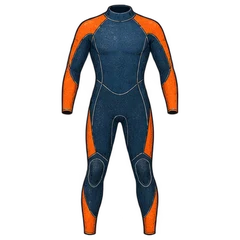
How a wetsuit is supposed to fit
O'Neill describes the right fit as a second skin, tightly wrapped around the body. The warmth comes from the thin layer of water between neoprene and skin. Excess material in the armpits, the lower back and behind the knees is the problem, because loose neoprene lets cold water flush through the suit.
Too tight causes the opposite trouble. O'Neill notes that restriction matters more in thick winter suits, which are less flexible to begin with. C-Skins adds that pressure at the neck, underarms or knees causes rubbing and strains the neoprene, which may shorten the suit's life. So you are looking for snug everywhere, with no single spot that pinches and no spot that gaps.
Take five measurements
Use a soft tape, wear underwear or a swimsuit, and ask someone to hold the tape level. The brands agree on most of this:
- Height. Stand straight, barefoot, heels together against a wall (Rip Curl, Srface), and measure from the floor to the top of your head.
- Weight. O'Neill suggests weighing yourself at the time of day you usually surf, since people tend to be lighter in the morning. Srface says to weigh yourself in the morning with no heavy clothing.
- Chest, or bust for women. Measure the widest part with your arms relaxed. Rip Curl says not to flex or hold your breath. Srface says to keep the tape just under the armpits and use the average of your inhale and exhale.
- Waist. Measure at the natural waistline, around belly-button level. O'Neill has you breathe out first. Rip Curl wants the tape snug, not tight.
- Hips. Women's charts add hips, measured at the widest point (Rip Curl, Srface).
Sumarpo, whose guide is written for swimmers, adds one more observation: note whether you are longer in the torso or in the legs, and whether your build is stocky, lean or broad through the shoulders. It calls build a big factor when comparing brands.
Reading a size chart
Every chart lists ranges for height, weight, chest and waist. The problem is that most people do not land in the same size on all four. Two brands that give the same letter size also give different numbers, as the table shows for a men's Medium.
| Men's Medium | Height | Weight | Chest | Waist |
|---|---|---|---|---|
| O'Neill | 175-180 cm | 70-77 kg | 99-104 cm | 79-84 cm |
| Srface | 175-181 cm | 69-77 kg | 95-99 cm | 80-85 cm |
Height and weight are close. Chest is not: O'Neill's Medium starts at the chest measurement where Srface's Medium ends. A man with a 100 cm chest is inside one brand's Medium and over the top of the other's. That is the main reason to read the chart for the actual suit rather than a generic one. Rip Curl makes the same point in its own guide, saying to use the manufacturer's chart as a starting point and to check each model's chart, since cuts vary by model and brand.
Kids' charts differ again. O'Neill's kids' chart lists length instead of height; its size 8 covers 133-141 cm, and its size 12 covers 147-155 cm.
Which measurement wins
When the numbers disagree, the brands give different priorities, and it helps to know who says what.
- Rip Curl: prioritize chest and height over waist and weight, every time. When in doubt, take the more snug size. A loose neck seal flushes cold water, while a snug waist relaxes after a few sessions.
- Srface: height and chest or bust are the two that matter most. If height points to one size and chest or waist to another, choose by chest. Waist and hips are more forgiving because the suit stretches more there. If you fall between sizes, consider the smaller one, provided your chest is in range.
- O'Neill: if your measurements fall at the top of a size's range, choose the next size up.
- Sumarpo: if you are between sizes and want buoyancy and a tight core, size down as long as you keep full shoulder mobility. If you want comfort and mobility, size up as long as the core stays snug without big wrinkles. If shoulders or back limit you, size for them and accept looseness at the waist, since a waist that is too tight makes breathing harder.
The O'Neill and Rip Curl advice pull in opposite directions at the top of a range, which is exactly where people tend to be. The reconciliation is that O'Neill is describing the weight and height end of the chart, and Rip Curl and Srface are telling you which column to trust if the columns disagree. Let chest decide, and use weight only to break ties.
Short and tall cuts
Letters after the size mark the cut. O'Neill says its sizes depend on body type, not just height: SS fits shorter people with a larger waist and chest, ST fits taller people with the same waist and chest, and S fits people in between. Srface gives the example of MS for a medium build who is shorter than average and LT for taller surfers who do not want to go up in width. Rip Curl says that if you run long through the torso or legs, check the tall variants (ST, MT, LT for men) before sizing up. The practical use is that a tall person who is Medium everywhere except length should try MT before moving to Large, which would be too wide.
Worked example: one man, two charts
Take a man who is 178 cm (5 ft 10 in), 77 kg (170 lb), with a 102 cm chest and an 85 cm waist. Against O'Neill's chart: his height fits both Medium (175-180) and Large (178-183). His weight is 77 kg, the top of Medium (70-77) and the bottom of Large (77-86). His chest is 102, inside Medium (99-104) and below Large's start at 104. His waist is 85, one centimetre above the top of Medium (79-84) and inside Large (84-89).
That is two columns pointing to Medium, one to Large, and one on the line. O'Neill's top-of-range rule, applied to weight, would say Large. Rip Curl and Srface both rank chest above weight and waist, and chest says Medium. Srface says the waist is the forgiving measurement. So the answer is Medium, with a check on the shoulders and neck when it is on. If the shoulders bind or the neck feels like it chokes at a one-finger gap, go to Large and look at the tall cut instead.
The same man on Srface's chart is outside Medium on chest (95-99 cm). That brand's chart would send him up a size. Same body, different suit, which is why you check the chart for the model you are buying.
Fit checks on land
Put the suit on slowly. Rip Curl suggests working it up section by section instead of yanking at the zip, and says that if getting in takes a serious struggle, size up. Once it is on, check these:
- Neck. Rip Curl puts the limit at two fingers under the collar. Sumarpo says one to two, and one is usually enough. Too loose floods the suit, too tight chokes you.
- Wrists and ankles. Sleeves end at or just above the wrist bone and legs end just above the ankle (Rip Curl, Sumarpo).
- Lower back and knees. No bunching at the lower back or behind the knees. Srface adds to look for gaps under the arms and near the legs.
- Shoulder seams. They should sit on the shoulder. Rip Curl lists seams sitting off the shoulder as a red flag, along with air pockets or bunching across the torso.
- Movement. Take a full breath and raise both arms overhead. If both arms move freely, the fit is right (Rip Curl). Squat and rotate your torso too. O'Neill says you should be able to bend down and touch your toes.
A little dry tightness is normal. Rip Curl says neoprene relaxes in the water. Chest tightness that does not ease after a few minutes is a red flag, as is water flushing in at the neck when you lean forward.
Checks in the water
Land tests cannot show flushing. Sumarpo says neoprene stretches slightly in water and compresses at depth, so a suit that feels right dry often feels right wet, and a suit that already feels loose on land will likely feel worse in the water. Srface suggests the same principle from the other side: a wetsuit should feel snug from the moment you put it on, and may feel slightly tight at first.
Look for a cold trickle down your spine when you duck under, or a balloon of water that collects at the small of your back as you paddle. Those are the signs of a gap. Neoprene molds to your body over time. Rip Curl suggests giving a new suit two or three sessions before judging the fit, and Srface says it can take a few sessions to settle. Back-zip suits run slightly roomier, according to Rip Curl, while chest-zip and zip-free suits give a closer seal and a trimmer fit, so entry style can move you between sizes even in one brand.
Questions
Should a wetsuit be tight?
It should be snug all round with no excess material at the neck, underarms or behind the knees. Srface says it should feel snug from the first moment; Rip Curl says some dry tightness is normal since neoprene relaxes in the water. Chest tightness that stays after a few minutes means the suit is too small.
What if I am between two wetsuit sizes?
Rip Curl says to choose by chest and height, and to take the more snug size when in doubt. O'Neill says to size up if you are at the top of the range. Check the short and tall cuts of the nearest size before giving up on it.
How many fingers should fit at the neck?
Rip Curl says two fingers is the limit. Sumarpo says one to two, with one usually enough. If you can get more than that under the collar, water will flush through.
Do women's wetsuits run large?
One brand says so. C-Skins states that its women's sizing runs large by between half and a whole size depending on style, growing at larger sizes. That is one brand's statement, so read the chart for the suit you want rather than assuming.
Related tools
Wetsuit size chartSize by height and weight, O'Neill and Rip Curl
 Bike helmet size chartHelmet size from head circumference
 Hockey skate size chartSkate size from shoe size
Measuring for other gear? See how to fit a bike helmet and how to measure your foot for boots.